Buy teampro.eu ?
We are moving the project
teampro.eu .
Are you interested in purchasing the domain
teampro.eu ?
domain@kv-gmbh.de · 0541-91531010
Buy teampro.eu ?
What are relatively unknown deities?
Relatively unknown deities are gods or goddesses from various mythologies and belief systems that are not widely recognized or worshipped. These deities may come from smaller or less well-known cultures, or they may be overshadowed by more popular gods and goddesses within their own pantheon. Relatively unknown deities often have specific domains or attributes, and they may have unique stories and symbolism associated with them. Exploring these lesser-known deities can provide insight into the diversity and richness of different religious traditions. **
How many deities are there?
The number of deities varies depending on the religious or spiritual tradition. For example, in Hinduism, there are millions of deities, with some being more prominent than others. In ancient Greek mythology, there were twelve major deities known as the Olympians, along with numerous other minor deities. In some monotheistic religions such as Christianity, there is only one deity, while in polytheistic traditions like the Norse pantheon, there are multiple deities. Ultimately, the number of deities is determined by the specific beliefs and practices of each religious or spiritual tradition. **


Similar search terms for Deities
Top-Angebote
Products related to Deities:
-
MACMILLAN Kim Scott Collection 2 Books Set Radical Respect & Radical Candor – Leadership, Communication & Workplace Culture GuidesThe Kim Scott Collection – 2 Books Set brings together two transformative leadership bestsellers: Radical Respect and Radical Candor. Written by acclaimed workplace expert Kim Scott, these books offer practical, honest, and empowering guidance for building stronger teams, better communication, and healthier workplace cultures. In Radical Candor, Scott introduces her now-famous framework:Care Personally + Challenge Directly.Learn how to deliver feedback effectively, build trust, and lead with clarity without becoming overly harsh or avoiding difficult conversations. In Radical Respect, Scott expands on inclusion, fairness, accountability and anti-bullying frameworks—showing readers how to build workplaces rooted in dignity, psychological safety, and genuine respect. Together, these books provide a complete roadmap for leaders, managers, HR teams and anyone who wants to communicate better, lead with courage, and create workplaces where people thrive.6,99 £*Shipping: 2,99 £Secure redirect to the provider
-
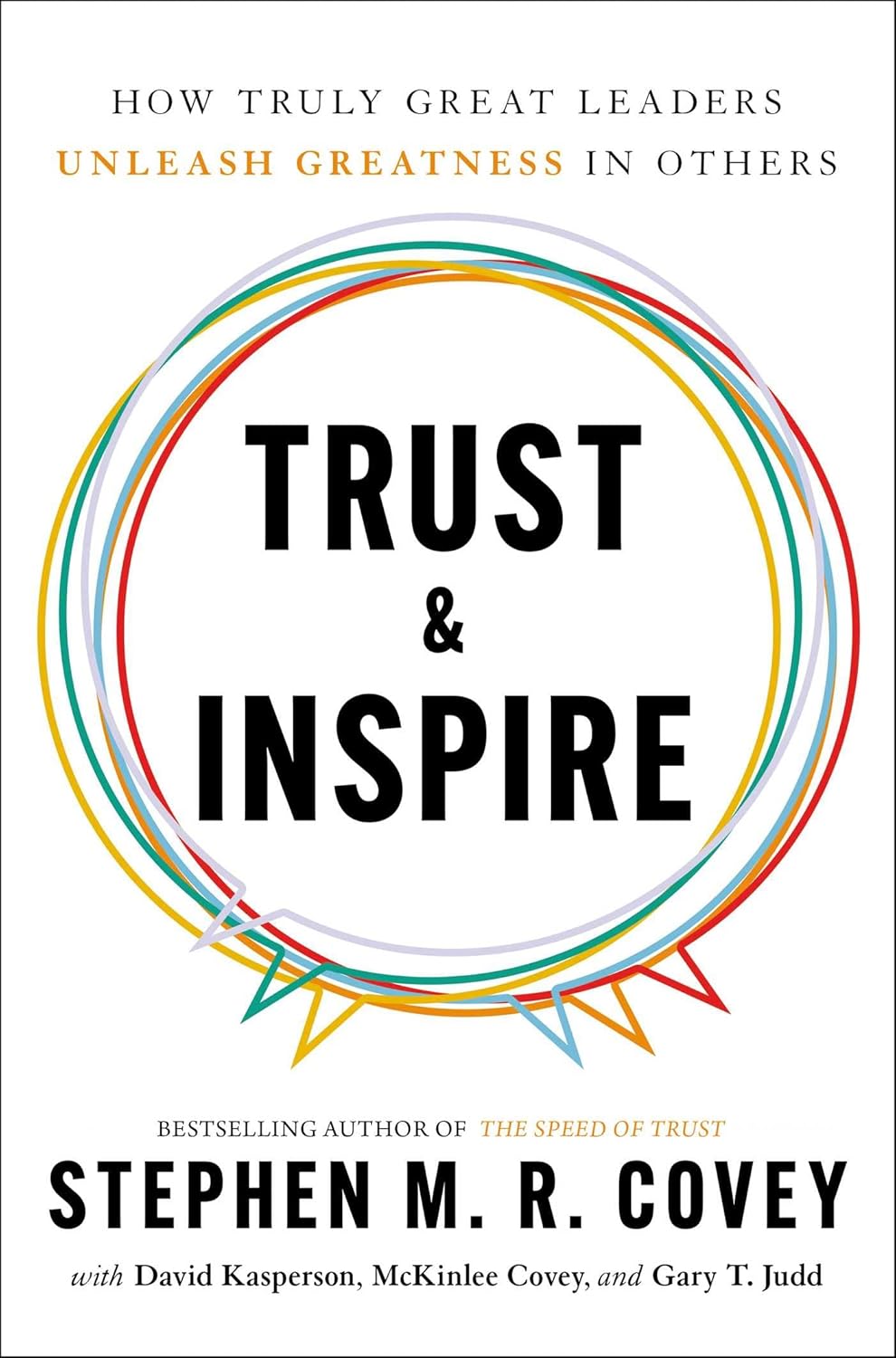
Simon & Schuster UK Trust & Inspire by Stephen M. R. Covey - Paperback - Leadership & Business Management BookTrust and Inspire by Stephen M. R. Covey is a compelling leadership book that challenges the outdated 'command and control' management style. Covey argues that leaders must evolve towards a 'trust and inspire' approach, built on mutual commitment, creativity, and collaboration. This paperback offers a practical, research-backed roadmap to transforming workplace culture and unlocking human potential. In the book, Covey draws on decades of research into trust within organisations to expose the shortcomings of traditional leadership models. He proposes a 'trust and inspire' style, which is more suitable for a world that has fundamentally changed. This book is ideal for managers, entrepreneurs, and anyone leading a team, as it provides a clear and actionable guide to improving leadership skills and building trust within an organisation. Published by Simon & Schuster UK, this book is a valuable resource for anyone looking to develop their leadership skills and improve their team's performance.8,99 £*Shipping: 2,99 £Secure redirect to the provider
-
Pan Macmillan Radical Candor by Kim Scott The Bestselling Leadership Book - Management, Feedback & Workplace Culture BookRadical Candor by Kim Scott is a groundbreaking leadership and communication guide that teaches how to give feedback effectively, build trust, and create high-performing teams without becoming harsh—or avoiding difficult conversations. Based on Scott’s experience at Google, Apple and Silicon Valley startups, Radical Candor introduces a simple but powerful framework built on two pillars: Care Personally Challenge Directly The book provides practical tools for giving honest feedback, fostering open communication, strengthening working relationships, and becoming a more compassionate and impactful leader. Perfect for managers, team leaders, HR professionals, and anyone wanting to build a healthy, productive workplace culture. Radical Candor is the perfect handbook for those who are looking to find meaning in their job and create an environment where people love both their work and their colleagues, and are motivated to strive to ever greater success.2,99 £*Shipping: 1,99 £Secure redirect to the provider
-
How Management Works: Concepts Visually Explained by DK - Hardback Non Fiction Business & Leadership Visual Guide for ManagersA definitive guide to modern management, 'How Management Works: Concepts Visually Explained' by DK offers clear explanations and bold diagrams to help you understand leadership, communication, strategy, team dynamics, and decision-making. This hardback book is ideal for new and experienced managers, business students, and anyone looking for a practical reference on effective team management. Published by DK as part of their 'How Things Work' visual series, it distills complex management theory into accessible guidance that you can apply immediately.13,49 £*Shipping: 2,99 £Secure redirect to the provider



-
What are evil gods or deities?
Evil gods or deities are supernatural beings in various mythologies and religions who are associated with malevolence, darkness, and destructive forces. They are often depicted as antagonistic figures who seek to bring harm, chaos, and suffering to the world and its inhabitants. In some belief systems, evil gods are seen as the embodiment of negative aspects of human nature, such as greed, jealousy, and violence. They are often contrasted with benevolent or good gods, and are the focus of rituals and prayers aimed at appeasing or warding off their harmful influence. **
-
Can you tell me more about Deities?
Deities are supernatural beings or gods that are worshipped and revered in various religions and belief systems around the world. They are often associated with specific powers, domains, or aspects of life, and are believed to have influence over the natural world and human affairs. Deities can take many forms, from anthropomorphic figures to abstract concepts, and are often depicted in religious texts, myths, and rituals. Worshipping deities is a way for believers to seek guidance, protection, blessings, and a deeper connection to the divine. **
-
Find a term for a complex of deities.
A term for a complex of deities is a pantheon. A pantheon refers to a group or collection of gods or goddesses that are worshipped in a particular religion or mythology. Pantheons can vary in size and significance, with some cultures having pantheons that consist of only a few deities, while others have pantheons with numerous gods and goddesses. **
-
Could you publish a list of Greek deities?
Sure! Here is a list of some of the major Greek deities: 1. Zeus - King of the gods and ruler of Mount Olympus 2. Hera - Queen of the gods and goddess of marriage and family 3. Poseidon - God of the sea and earthquakes 4. Demeter - Goddess of agriculture and the harvest 5. Athena - Goddess of wisdom, warfare, and crafts 6. Apollo - God of the sun, music, and prophecy 7. Artemis - Goddess of the hunt, wilderness, and childbirth 8. Ares - God of war 9. Aphrodite - Goddess of love and beauty 10. Hermes - Messenger of the gods and god of travel, commerce, and thieves This is just a small selection of the many gods and goddesses in Greek mythology. **


After which mythical figures or deities are elements named?
Elements are named after various mythical figures or deities from different cultures. For example, the element Mercury is named after the Roman god Mercury, while Uranium is named after the planet Uranus. Other examples include Thorium, named after the Norse god Thor, and Plutonium, named after the Roman god Pluto. These names are often chosen based on the properties or characteristics of the elements. **
Search for a term for a complex of deities.
The term for a complex of deities is "pantheon." A pantheon refers to a group or collection of gods or goddesses that are worshiped in a particular religion or mythology. These deities often have specific roles, attributes, and relationships with each other within the pantheon. Examples of famous pantheons include the Greek pantheon, the Roman pantheon, and the Hindu pantheon. **
Top-Angebote
Products related to Deities:
-
Pathfinder Dice Gods - Eight Deities Unique Dice Game for Up to Five Players - Paizo PublishingFast-paced dice-drafting game set among the iconic gods of the Pathfinder pantheon. Choose one of eight featured deities with a twelve-sided die. Roll your god's die and use symbols to play minigames. Compete to become the most favored god with strategic choices and dice results. Designed for up to five players for quick tabletop sessions.39,97 £*Shipping: 3,95 £Secure redirect to the provider
-
Various Publishers How to Talk to Anyone, Next Conversation & Psychology of Management - 3 Book Paperback Set - Communication, Leadership & Management PsychologyThis 3-book collection set brings together three practical, people-focused reads for anyone who wants to communicate better and lead more effectively. Leil Lowndes' classic 'How to Talk to Anyone' pairs with Jefferson Fisher's 'Next Conversation' and a foundational 'Psychology of Management' title to cover everyday conversation, conflict resolution, and workplace psychology in one bundle. Whether you are prepping for interviews, managing a team, or simply want to feel more confident in social situations, this paperback set offers accessible, actionable guidance you can start using immediately. The set includes 'How to Talk to Anyone' by Leil Lowndes, 'Next Conversation' by Jefferson Fisher, and 'Psychology of Management'.20,99 £*Shipping: 2,99 £Secure redirect to the provider
-
MACMILLAN Kim Scott Collection 2 Books Set Radical Respect & Radical Candor – Leadership, Communication & Workplace Culture GuidesThe Kim Scott Collection – 2 Books Set brings together two transformative leadership bestsellers: Radical Respect and Radical Candor. Written by acclaimed workplace expert Kim Scott, these books offer practical, honest, and empowering guidance for building stronger teams, better communication, and healthier workplace cultures. In Radical Candor, Scott introduces her now-famous framework:Care Personally + Challenge Directly.Learn how to deliver feedback effectively, build trust, and lead with clarity without becoming overly harsh or avoiding difficult conversations. In Radical Respect, Scott expands on inclusion, fairness, accountability and anti-bullying frameworks—showing readers how to build workplaces rooted in dignity, psychological safety, and genuine respect. Together, these books provide a complete roadmap for leaders, managers, HR teams and anyone who wants to communicate better, lead with courage, and create workplaces where people thrive.6,99 £*Shipping: 2,99 £Secure redirect to the provider
-
Simon & Schuster UK Trust & Inspire by Stephen M. R. Covey - Paperback - Leadership & Business Management BookTrust and Inspire by Stephen M. R. Covey is a compelling leadership book that challenges the outdated 'command and control' management style. Covey argues that leaders must evolve towards a 'trust and inspire' approach, built on mutual commitment, creativity, and collaboration. This paperback offers a practical, research-backed roadmap to transforming workplace culture and unlocking human potential. In the book, Covey draws on decades of research into trust within organisations to expose the shortcomings of traditional leadership models. He proposes a 'trust and inspire' style, which is more suitable for a world that has fundamentally changed. This book is ideal for managers, entrepreneurs, and anyone leading a team, as it provides a clear and actionable guide to improving leadership skills and building trust within an organisation. Published by Simon & Schuster UK, this book is a valuable resource for anyone looking to develop their leadership skills and improve their team's performance.8,99 £*Shipping: 2,99 £Secure redirect to the provider
-
What are relatively unknown deities?
Relatively unknown deities are gods or goddesses from various mythologies and belief systems that are not widely recognized or worshipped. These deities may come from smaller or less well-known cultures, or they may be overshadowed by more popular gods and goddesses within their own pantheon. Relatively unknown deities often have specific domains or attributes, and they may have unique stories and symbolism associated with them. Exploring these lesser-known deities can provide insight into the diversity and richness of different religious traditions. **
-
How many deities are there?
The number of deities varies depending on the religious or spiritual tradition. For example, in Hinduism, there are millions of deities, with some being more prominent than others. In ancient Greek mythology, there were twelve major deities known as the Olympians, along with numerous other minor deities. In some monotheistic religions such as Christianity, there is only one deity, while in polytheistic traditions like the Norse pantheon, there are multiple deities. Ultimately, the number of deities is determined by the specific beliefs and practices of each religious or spiritual tradition. **
-
What are evil gods or deities?
Evil gods or deities are supernatural beings in various mythologies and religions who are associated with malevolence, darkness, and destructive forces. They are often depicted as antagonistic figures who seek to bring harm, chaos, and suffering to the world and its inhabitants. In some belief systems, evil gods are seen as the embodiment of negative aspects of human nature, such as greed, jealousy, and violence. They are often contrasted with benevolent or good gods, and are the focus of rituals and prayers aimed at appeasing or warding off their harmful influence. **
-
Can you tell me more about Deities?
Deities are supernatural beings or gods that are worshipped and revered in various religions and belief systems around the world. They are often associated with specific powers, domains, or aspects of life, and are believed to have influence over the natural world and human affairs. Deities can take many forms, from anthropomorphic figures to abstract concepts, and are often depicted in religious texts, myths, and rituals. Worshipping deities is a way for believers to seek guidance, protection, blessings, and a deeper connection to the divine. **
Similar search terms for Deities
-
Pan Macmillan Radical Candor by Kim Scott The Bestselling Leadership Book - Management, Feedback & Workplace Culture BookRadical Candor by Kim Scott is a groundbreaking leadership and communication guide that teaches how to give feedback effectively, build trust, and create high-performing teams without becoming harsh—or avoiding difficult conversations. Based on Scott’s experience at Google, Apple and Silicon Valley startups, Radical Candor introduces a simple but powerful framework built on two pillars: Care Personally Challenge Directly The book provides practical tools for giving honest feedback, fostering open communication, strengthening working relationships, and becoming a more compassionate and impactful leader. Perfect for managers, team leaders, HR professionals, and anyone wanting to build a healthy, productive workplace culture. Radical Candor is the perfect handbook for those who are looking to find meaning in their job and create an environment where people love both their work and their colleagues, and are motivated to strive to ever greater success.2,99 £*Shipping: 1,99 £Secure redirect to the provider
-
How Management Works: Concepts Visually Explained by DK - Hardback Non Fiction Business & Leadership Visual Guide for ManagersA definitive guide to modern management, 'How Management Works: Concepts Visually Explained' by DK offers clear explanations and bold diagrams to help you understand leadership, communication, strategy, team dynamics, and decision-making. This hardback book is ideal for new and experienced managers, business students, and anyone looking for a practical reference on effective team management. Published by DK as part of their 'How Things Work' visual series, it distills complex management theory into accessible guidance that you can apply immediately.13,49 £*Shipping: 2,99 £Secure redirect to the provider
-
Various Publishers The Diary of a CEO, That Will Never Work & Fierce Conversations 3 Book Paperback Set - Business, Leadership & Communication Skills CollectionThis three-book paperback set brings together some of the sharpest voices in modern business thinking. The set includes The Diary of a CEO, That Will Never Work, and Fierce Conversations. Written by Steven Bartlett, Marc Randolph, and Susan Scott, these books offer timeless lessons from entrepreneurship and thousands of podcast conversations, the extraordinary true story of building Netflix from scratch, and the art of honest, high-impact conversation. Together they form a practical toolkit for anyone building a career, a company, or simply better relationships through clearer communication.29,99 £*Shipping: 2,99 £Secure redirect to the provider
-
Rupa Publications Lead With Words, Win With Action by Dale Carnegie - Paperback Business & Leadership Self-Help Book - Practical Guide to Influence, CommunicationLead With Words, Win With Action by Dale Carnegie is a practical guide to communicating with confidence and leading with impact. This paperback book distils the enduring principles of Dale Carnegie's philosophy of influence into a modern guide for anyone who wants to build trust, motivate others, and convert conversation into real results. It blends timeless wisdom with actionable strategies for the modern workplace. The book explores how the right combination of language, listening, and follow-through can transform everyday interactions into lasting influence. Chapters cover practical topics such as how to open a conversation, disagree without creating an enemy, and more. Published by Rupa Publications, this book is a concise and energising read for anyone looking to improve their communication skills and leadership abilities.2,99 £*Shipping: 2,99 £Secure redirect to the provider
-
Find a term for a complex of deities.
A term for a complex of deities is a pantheon. A pantheon refers to a group or collection of gods or goddesses that are worshipped in a particular religion or mythology. Pantheons can vary in size and significance, with some cultures having pantheons that consist of only a few deities, while others have pantheons with numerous gods and goddesses. **
-
Could you publish a list of Greek deities?
Sure! Here is a list of some of the major Greek deities: 1. Zeus - King of the gods and ruler of Mount Olympus 2. Hera - Queen of the gods and goddess of marriage and family 3. Poseidon - God of the sea and earthquakes 4. Demeter - Goddess of agriculture and the harvest 5. Athena - Goddess of wisdom, warfare, and crafts 6. Apollo - God of the sun, music, and prophecy 7. Artemis - Goddess of the hunt, wilderness, and childbirth 8. Ares - God of war 9. Aphrodite - Goddess of love and beauty 10. Hermes - Messenger of the gods and god of travel, commerce, and thieves This is just a small selection of the many gods and goddesses in Greek mythology. **
-
After which mythical figures or deities are elements named?
Elements are named after various mythical figures or deities from different cultures. For example, the element Mercury is named after the Roman god Mercury, while Uranium is named after the planet Uranus. Other examples include Thorium, named after the Norse god Thor, and Plutonium, named after the Roman god Pluto. These names are often chosen based on the properties or characteristics of the elements. **
-
Search for a term for a complex of deities.
The term for a complex of deities is "pantheon." A pantheon refers to a group or collection of gods or goddesses that are worshiped in a particular religion or mythology. These deities often have specific roles, attributes, and relationships with each other within the pantheon. Examples of famous pantheons include the Greek pantheon, the Roman pantheon, and the Hindu pantheon. **
* All prices are inclusive of VAT and, if applicable, plus shipping costs. The offer information is based on the details provided by the respective shop and is updated through automated processes. Real-time updates do not occur, so deviations can occur in individual cases. ** Note: Parts of this content were created by AI.