Buy teampro.eu ?
We are moving the project
teampro.eu .
Are you interested in purchasing the domain
teampro.eu ?
domain@kv-gmbh.de · 0541-91531010
Buy teampro.eu ?
What is the difference between factual judgment and value judgment?
Factual judgment is based on objective, verifiable information and evidence, while value judgment is based on subjective beliefs, opinions, and personal values. Factual judgment can be proven or disproven with evidence, while value judgment is based on individual perspectives and cannot be objectively proven. Factual judgment is often used in scientific, logical, or empirical reasoning, while value judgment is often used in ethical, moral, or personal decision-making. **
Is the judgment final?
Yes, the judgment is final. Once a judgment has been made by a court, it is legally binding and cannot be changed unless there are specific legal grounds for an appeal or modification. Parties involved in the case must abide by the judgment and its terms, and failure to do so can result in legal consequences. It is important to carefully consider the implications of a judgment before it is made, as it is difficult to reverse once it has been finalized. **


Similar search terms for Judgment
Top-Angebote
Products related to Judgment:
-
William Collins Noise: A Flaw in Human Judgment - Daniel Kahneman, Olivier Sibony & Cass R. Sunstein - Paperback - Behavioural Science Nonfiction BestsellerNoise is a landmark work of behavioural science from Nobel laureate Daniel Kahneman, together with co-authors Olivier Sibony and Cass R. Sunstein. Following the success of Thinking, Fast and Slow, this paperback edition examines an overlooked source of error in human judgment: unwanted variability, or 'noise.' Drawing on studies from courtrooms, hospitals, and boardrooms, the authors reveal how identical cases can produce wildly different outcomes depending on who is judging them, and what can be done about it. We tend to assume that when experts disagree, bias is to blame. Noise makes the compelling case that a second, less visible problem is often just as damaging: inconsistency. Two doctors examining the same X-ray, two judges sentencing the same offence, or two underwriters pricing the same policy can arrive at strikingly different conclusions purely because of the variability in human judgment.3,99 £*Shipping: 2,99 £Secure redirect to the provider
-
MACMILLAN Kim Scott Collection 2 Books Set Radical Respect & Radical Candor – Leadership, Communication & Workplace Culture GuidesThe Kim Scott Collection – 2 Books Set brings together two transformative leadership bestsellers: Radical Respect and Radical Candor. Written by acclaimed workplace expert Kim Scott, these books offer practical, honest, and empowering guidance for building stronger teams, better communication, and healthier workplace cultures. In Radical Candor, Scott introduces her now-famous framework:Care Personally + Challenge Directly.Learn how to deliver feedback effectively, build trust, and lead with clarity without becoming overly harsh or avoiding difficult conversations. In Radical Respect, Scott expands on inclusion, fairness, accountability and anti-bullying frameworks—showing readers how to build workplaces rooted in dignity, psychological safety, and genuine respect. Together, these books provide a complete roadmap for leaders, managers, HR teams and anyone who wants to communicate better, lead with courage, and create workplaces where people thrive.6,99 £*Shipping: 2,99 £Secure redirect to the provider
-
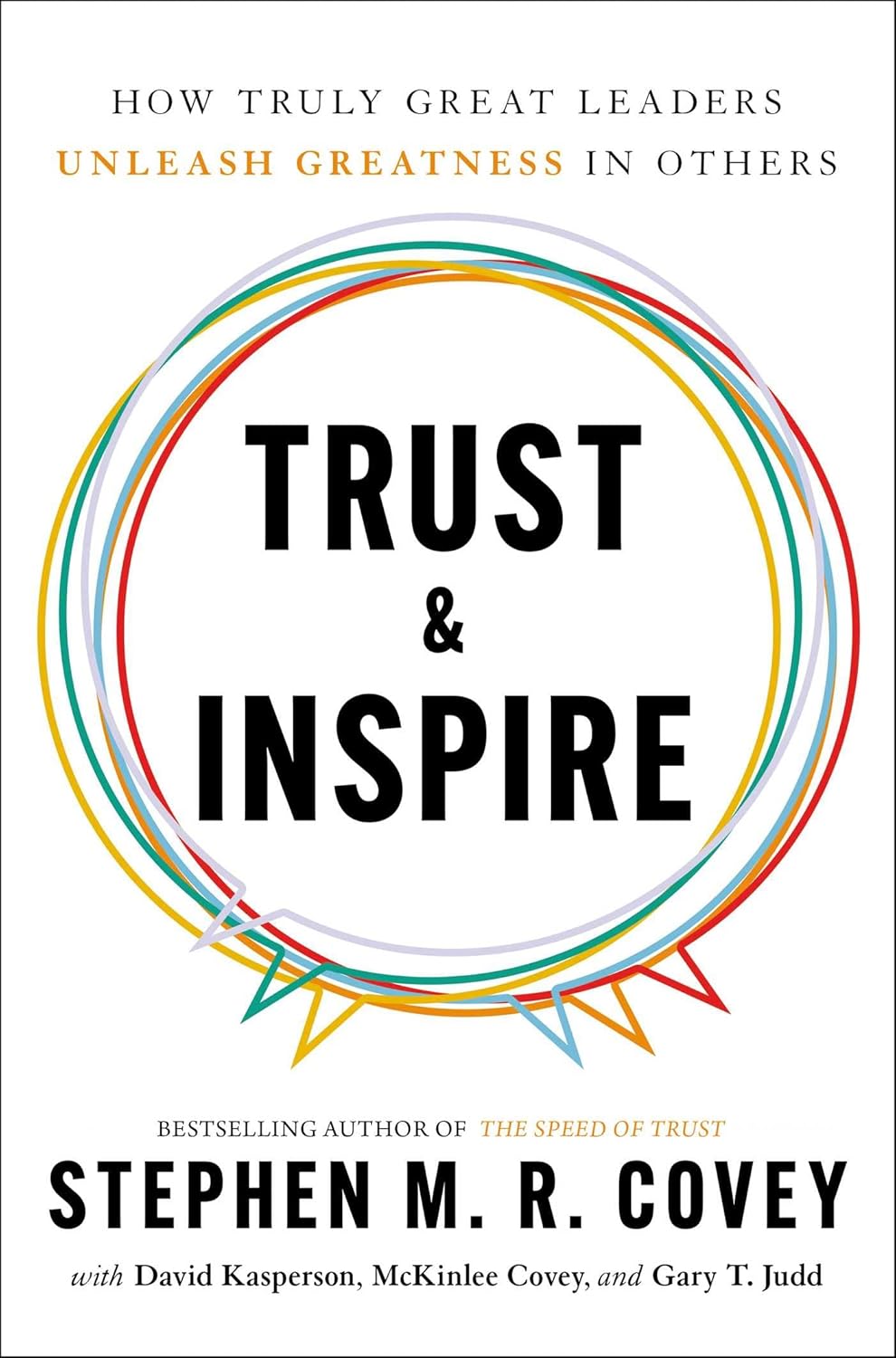
Simon & Schuster UK Trust & Inspire by Stephen M. R. Covey - Paperback - Leadership & Business Management BookTrust and Inspire by Stephen M. R. Covey is a compelling leadership book that challenges the outdated 'command and control' management style. Covey argues that leaders must evolve towards a 'trust and inspire' approach, built on mutual commitment, creativity, and collaboration. This paperback offers a practical, research-backed roadmap to transforming workplace culture and unlocking human potential. In the book, Covey draws on decades of research into trust within organisations to expose the shortcomings of traditional leadership models. He proposes a 'trust and inspire' style, which is more suitable for a world that has fundamentally changed. This book is ideal for managers, entrepreneurs, and anyone leading a team, as it provides a clear and actionable guide to improving leadership skills and building trust within an organisation. Published by Simon & Schuster UK, this book is a valuable resource for anyone looking to develop their leadership skills and improve their team's performance.8,99 £*Shipping: 2,99 £Secure redirect to the provider
-
Pan Macmillan Radical Candor by Kim Scott The Bestselling Leadership Book - Management, Feedback & Workplace Culture BookRadical Candor by Kim Scott is a groundbreaking leadership and communication guide that teaches how to give feedback effectively, build trust, and create high-performing teams without becoming harsh—or avoiding difficult conversations. Based on Scott’s experience at Google, Apple and Silicon Valley startups, Radical Candor introduces a simple but powerful framework built on two pillars: Care Personally Challenge Directly The book provides practical tools for giving honest feedback, fostering open communication, strengthening working relationships, and becoming a more compassionate and impactful leader. Perfect for managers, team leaders, HR professionals, and anyone wanting to build a healthy, productive workplace culture. Radical Candor is the perfect handbook for those who are looking to find meaning in their job and create an environment where people love both their work and their colleagues, and are motivated to strive to ever greater success.2,99 £*Shipping: 1,99 £Secure redirect to the provider


-
What is the difference between a factual judgment and a value judgment?
A factual judgment is based on verifiable evidence and objective information, while a value judgment is based on personal beliefs, preferences, or moral principles. Factual judgments can be proven or disproven through evidence and logic, while value judgments are subjective and influenced by individual perspectives and values. Factual judgments deal with what is true or false, while value judgments deal with what is good or bad, right or wrong based on personal values and beliefs. **
-
What is the value judgment and the factual judgment about the Crusades?
The value judgment about the Crusades is that they were a series of religiously motivated wars that resulted in significant loss of life and suffering, and were ultimately a negative and destructive force in history. The factual judgment about the Crusades is that they were a series of military campaigns sanctioned by the Latin Church in the medieval period, with the goal of capturing Jerusalem and other holy sites from Muslim control. The Crusades had a lasting impact on the political, social, and religious dynamics of Europe and the Middle East. **
-
What is the difference between a regular judgment and a moral judgment?
A regular judgment is based on objective criteria, such as evidence, facts, and logic, while a moral judgment is based on subjective beliefs about what is right or wrong. Regular judgments are often made in legal or professional contexts, while moral judgments are more personal and based on individual values and ethics. Regular judgments are often used to make decisions in a fair and impartial manner, while moral judgments are influenced by emotions, cultural norms, and personal experiences. **
-
How long does the Day of Judgment and the Last Judgment last?
The Day of Judgment and the Last Judgment are concepts found in various religious traditions, including Christianity and Islam. In Christianity, the Last Judgment is believed to be the final judgment of all humanity by God, and it is said to occur at the end of time. The duration of the Last Judgment is not specified in Christian teachings. In Islam, the Day of Judgment is also the final assessment of humanity by Allah, and it is said to last for a period of 50,000 years according to Islamic tradition. However, the exact duration of the Last Judgment is ultimately a matter of faith and interpretation within each religious tradition. **
What is the difference between a value judgment and a factual judgment?
A value judgment is an opinion or assessment based on personal beliefs, preferences, or moral principles. It is subjective and reflects the individual's values and attitudes. On the other hand, a factual judgment is based on verifiable evidence, data, or observations. It is objective and can be proven or disproven through empirical evidence. In summary, the main difference between the two is that value judgments are based on personal values and beliefs, while factual judgments are based on objective evidence. **
Is it always correct to make a factual judgment before a value judgment?
It is not always necessary to make a factual judgment before a value judgment. While factual judgments provide important information and context, value judgments are subjective and based on personal beliefs and principles. In some cases, individuals may prioritize their values over factual information when making decisions. It is important to consider both factual and value judgments in order to make well-rounded and informed decisions. **
Top-Angebote
Products related to Judgment:
-
Lost Judgment Xbox Series X S / Xbox One Account Access UK ONLYTHIS IS A SHARED ACCOUNT TO PLAY ONLINE USING YOUR OWN PROFILE THIS IS NOT A CODE OR A PHYSICAL DISC, YOU WILL NOT RECEIVE ANYTHING IN THE POST NOTHING IS POSTED DETAILS ARE SENT VIA MESSAGES EMAIL SENT SAME DAY IF YOU DO NOT SEE YOUR EMAIL AFTER PAYMENT PLEASE CHECK YOUR SPAM OR JUNK FOLDERS. AFTER PAYMENT YOU WILL BE INVITED TO DISCORD CHANNEL TO GET YOUR ACCESS. Lost Judgment is an action-adventure video game developed by Ryu Ga Gotoku Studio and published by Sega. It's a sequel to the 2018 game Judgment (itself a spin-off of the Yakuza series). Here's a rundown of what to expect: Story and Setting: You take on the role of Takayuki Yagami, a private detective with a past as a lawyer. The game takes place in the bustling city of Yokohama, Japan, with a focus on a prestigious high school. The story revolves around a complex case involving bullying, a seemingly impossible murder, and a fight for justice. Gameplay: Lost Judgment blends detective work with thrilling action sequences. You'll need to gather evidence, tail suspects, and interrogate witnesses. When things get physical, you can utilize Yagami's martial arts skills in dynamic combat encounters. The game introduces a unique "School Stories" gameplay element where you go undercover as a high school student to investigate from within. This involves participating in school activities and clubs to gain trust and uncover secrets. Key Features: Multiple investigative tools: Utilize gadgets like a drone for surveillance, a magnifying glass for examining clues, and a lockpicking kit to access hidden areas. Parkour and athleticism: Yagami can scale buildings, chase suspects across rooftops, and use his agility to his advantage. Side activities and distractions: Take a break from the case and unwind with a variety of minigames like arcade games, drone racing, and even solving mysteries at a local bar. Overall, Lost Judgment is a captivating detective thriller with engaging combat and a unique school infiltration mechanic. It offers a blend of serious investigation and lighthearted activities, catering to players who enjoy a well-rounded gaming experience.5,40 £*Shipping: 0,00 £Secure redirect to the provider
-
Various Publishers How to Talk to Anyone, Next Conversation & Psychology of Management - 3 Book Paperback Set - Communication, Leadership & Management PsychologyThis 3-book collection set brings together three practical, people-focused reads for anyone who wants to communicate better and lead more effectively. Leil Lowndes' classic 'How to Talk to Anyone' pairs with Jefferson Fisher's 'Next Conversation' and a foundational 'Psychology of Management' title to cover everyday conversation, conflict resolution, and workplace psychology in one bundle. Whether you are prepping for interviews, managing a team, or simply want to feel more confident in social situations, this paperback set offers accessible, actionable guidance you can start using immediately. The set includes 'How to Talk to Anyone' by Leil Lowndes, 'Next Conversation' by Jefferson Fisher, and 'Psychology of Management'.20,99 £*Shipping: 2,99 £Secure redirect to the provider
-
William Collins Noise: A Flaw in Human Judgment - Daniel Kahneman, Olivier Sibony & Cass R. Sunstein - Paperback - Behavioural Science Nonfiction BestsellerNoise is a landmark work of behavioural science from Nobel laureate Daniel Kahneman, together with co-authors Olivier Sibony and Cass R. Sunstein. Following the success of Thinking, Fast and Slow, this paperback edition examines an overlooked source of error in human judgment: unwanted variability, or 'noise.' Drawing on studies from courtrooms, hospitals, and boardrooms, the authors reveal how identical cases can produce wildly different outcomes depending on who is judging them, and what can be done about it. We tend to assume that when experts disagree, bias is to blame. Noise makes the compelling case that a second, less visible problem is often just as damaging: inconsistency. Two doctors examining the same X-ray, two judges sentencing the same offence, or two underwriters pricing the same policy can arrive at strikingly different conclusions purely because of the variability in human judgment.3,99 £*Shipping: 2,99 £Secure redirect to the provider
-
MACMILLAN Kim Scott Collection 2 Books Set Radical Respect & Radical Candor – Leadership, Communication & Workplace Culture GuidesThe Kim Scott Collection – 2 Books Set brings together two transformative leadership bestsellers: Radical Respect and Radical Candor. Written by acclaimed workplace expert Kim Scott, these books offer practical, honest, and empowering guidance for building stronger teams, better communication, and healthier workplace cultures. In Radical Candor, Scott introduces her now-famous framework:Care Personally + Challenge Directly.Learn how to deliver feedback effectively, build trust, and lead with clarity without becoming overly harsh or avoiding difficult conversations. In Radical Respect, Scott expands on inclusion, fairness, accountability and anti-bullying frameworks—showing readers how to build workplaces rooted in dignity, psychological safety, and genuine respect. Together, these books provide a complete roadmap for leaders, managers, HR teams and anyone who wants to communicate better, lead with courage, and create workplaces where people thrive.6,99 £*Shipping: 2,99 £Secure redirect to the provider
-
What is the difference between factual judgment and value judgment?
Factual judgment is based on objective, verifiable information and evidence, while value judgment is based on subjective beliefs, opinions, and personal values. Factual judgment can be proven or disproven with evidence, while value judgment is based on individual perspectives and cannot be objectively proven. Factual judgment is often used in scientific, logical, or empirical reasoning, while value judgment is often used in ethical, moral, or personal decision-making. **
-
Is the judgment final?
Yes, the judgment is final. Once a judgment has been made by a court, it is legally binding and cannot be changed unless there are specific legal grounds for an appeal or modification. Parties involved in the case must abide by the judgment and its terms, and failure to do so can result in legal consequences. It is important to carefully consider the implications of a judgment before it is made, as it is difficult to reverse once it has been finalized. **
-
What is the difference between a factual judgment and a value judgment?
A factual judgment is based on verifiable evidence and objective information, while a value judgment is based on personal beliefs, preferences, or moral principles. Factual judgments can be proven or disproven through evidence and logic, while value judgments are subjective and influenced by individual perspectives and values. Factual judgments deal with what is true or false, while value judgments deal with what is good or bad, right or wrong based on personal values and beliefs. **
-
What is the value judgment and the factual judgment about the Crusades?
The value judgment about the Crusades is that they were a series of religiously motivated wars that resulted in significant loss of life and suffering, and were ultimately a negative and destructive force in history. The factual judgment about the Crusades is that they were a series of military campaigns sanctioned by the Latin Church in the medieval period, with the goal of capturing Jerusalem and other holy sites from Muslim control. The Crusades had a lasting impact on the political, social, and religious dynamics of Europe and the Middle East. **
Similar search terms for Judgment
-
Simon & Schuster UK Trust & Inspire by Stephen M. R. Covey - Paperback - Leadership & Business Management BookTrust and Inspire by Stephen M. R. Covey is a compelling leadership book that challenges the outdated 'command and control' management style. Covey argues that leaders must evolve towards a 'trust and inspire' approach, built on mutual commitment, creativity, and collaboration. This paperback offers a practical, research-backed roadmap to transforming workplace culture and unlocking human potential. In the book, Covey draws on decades of research into trust within organisations to expose the shortcomings of traditional leadership models. He proposes a 'trust and inspire' style, which is more suitable for a world that has fundamentally changed. This book is ideal for managers, entrepreneurs, and anyone leading a team, as it provides a clear and actionable guide to improving leadership skills and building trust within an organisation. Published by Simon & Schuster UK, this book is a valuable resource for anyone looking to develop their leadership skills and improve their team's performance.8,99 £*Shipping: 2,99 £Secure redirect to the provider
-
Pan Macmillan Radical Candor by Kim Scott The Bestselling Leadership Book - Management, Feedback & Workplace Culture BookRadical Candor by Kim Scott is a groundbreaking leadership and communication guide that teaches how to give feedback effectively, build trust, and create high-performing teams without becoming harsh—or avoiding difficult conversations. Based on Scott’s experience at Google, Apple and Silicon Valley startups, Radical Candor introduces a simple but powerful framework built on two pillars: Care Personally Challenge Directly The book provides practical tools for giving honest feedback, fostering open communication, strengthening working relationships, and becoming a more compassionate and impactful leader. Perfect for managers, team leaders, HR professionals, and anyone wanting to build a healthy, productive workplace culture. Radical Candor is the perfect handbook for those who are looking to find meaning in their job and create an environment where people love both their work and their colleagues, and are motivated to strive to ever greater success.2,99 £*Shipping: 1,99 £Secure redirect to the provider
-
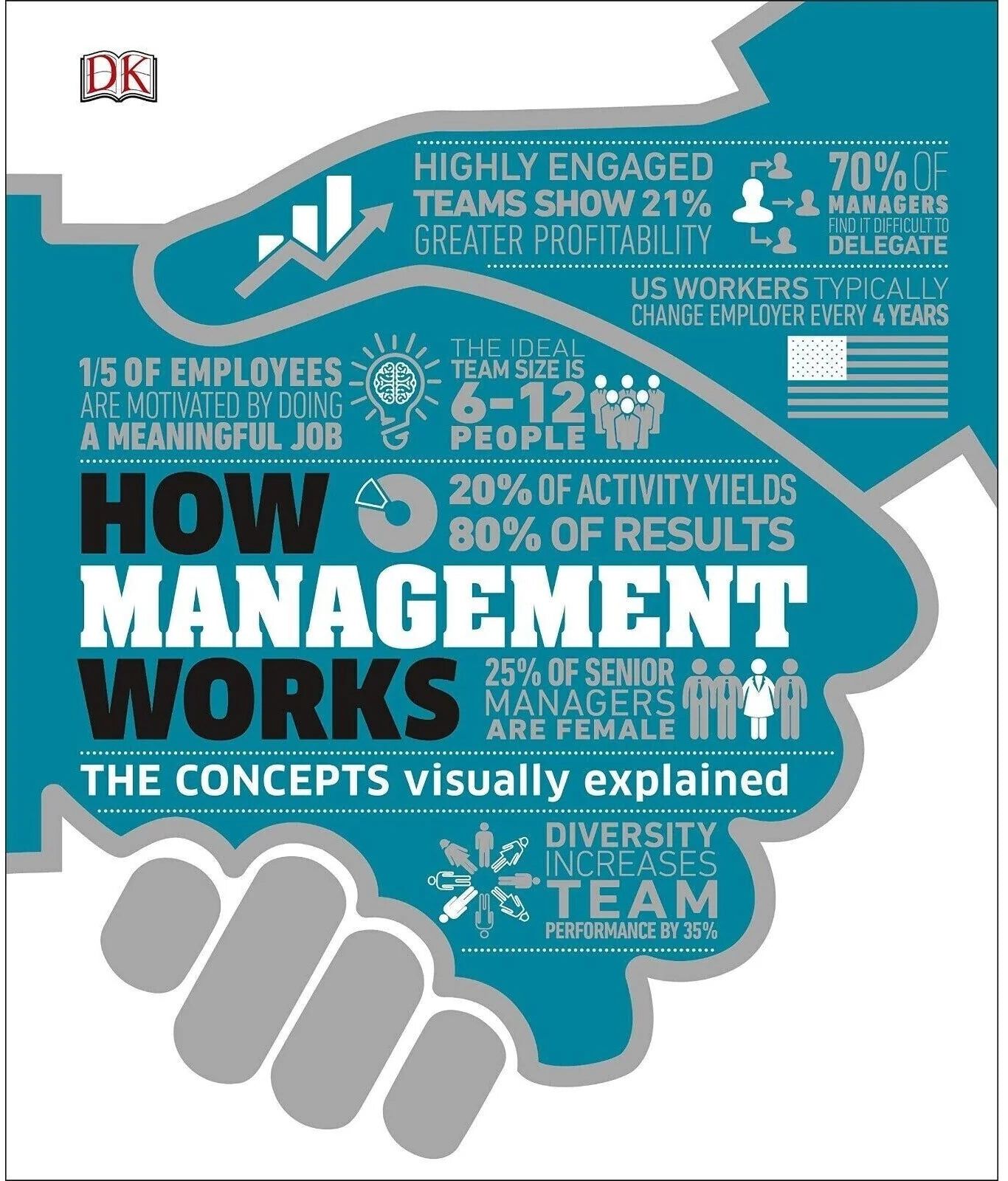
How Management Works: Concepts Visually Explained by DK - Hardback Non Fiction Business & Leadership Visual Guide for ManagersA definitive guide to modern management, 'How Management Works: Concepts Visually Explained' by DK offers clear explanations and bold diagrams to help you understand leadership, communication, strategy, team dynamics, and decision-making. This hardback book is ideal for new and experienced managers, business students, and anyone looking for a practical reference on effective team management. Published by DK as part of their 'How Things Work' visual series, it distills complex management theory into accessible guidance that you can apply immediately.13,49 £*Shipping: 2,99 £Secure redirect to the provider
-
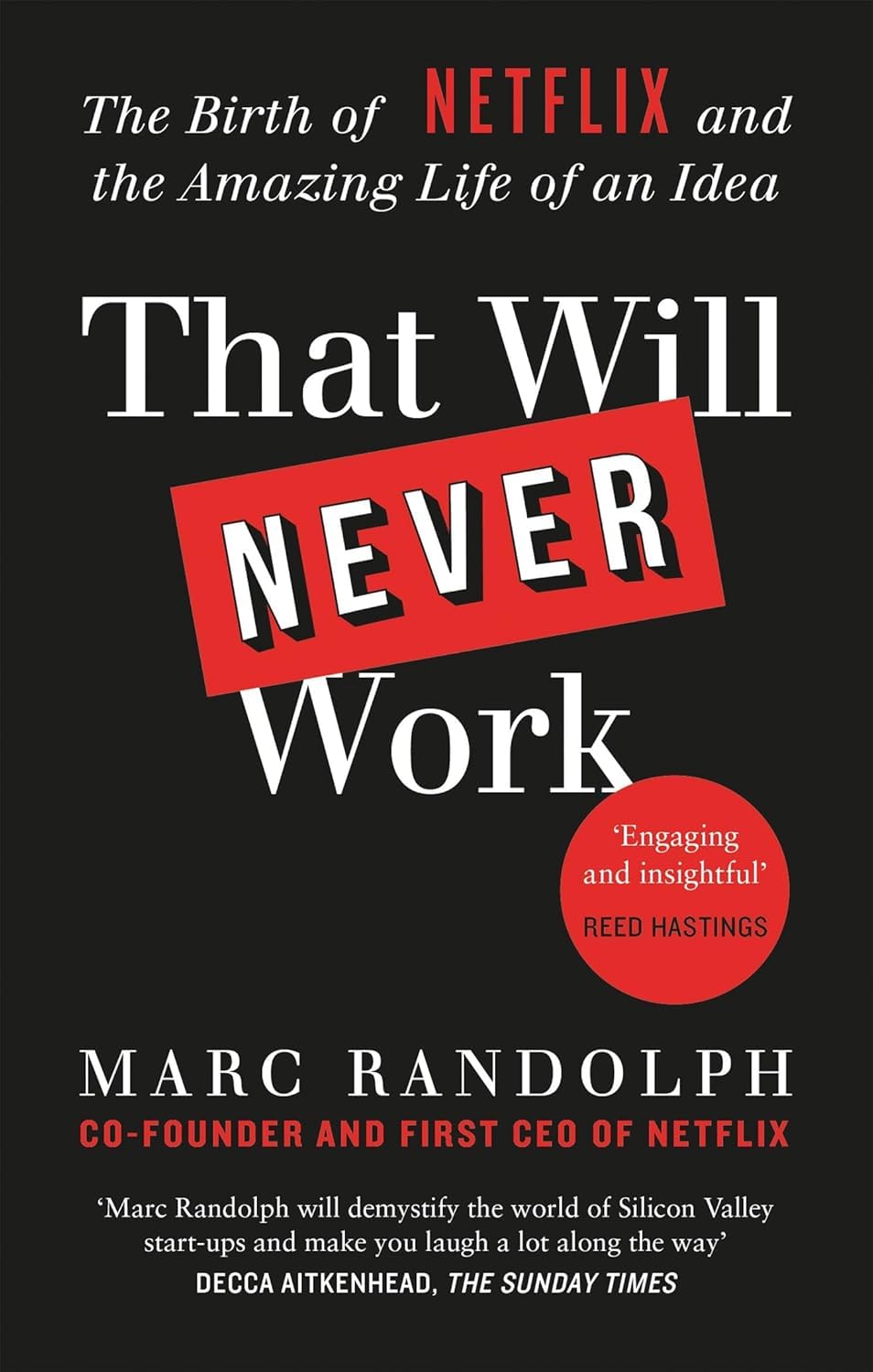
Various Publishers The Diary of a CEO, That Will Never Work & Fierce Conversations 3 Book Paperback Set - Business, Leadership & Communication Skills CollectionThis three-book paperback set brings together some of the sharpest voices in modern business thinking. The set includes The Diary of a CEO, That Will Never Work, and Fierce Conversations. Written by Steven Bartlett, Marc Randolph, and Susan Scott, these books offer timeless lessons from entrepreneurship and thousands of podcast conversations, the extraordinary true story of building Netflix from scratch, and the art of honest, high-impact conversation. Together they form a practical toolkit for anyone building a career, a company, or simply better relationships through clearer communication.29,99 £*Shipping: 2,99 £Secure redirect to the provider
-
What is the difference between a regular judgment and a moral judgment?
A regular judgment is based on objective criteria, such as evidence, facts, and logic, while a moral judgment is based on subjective beliefs about what is right or wrong. Regular judgments are often made in legal or professional contexts, while moral judgments are more personal and based on individual values and ethics. Regular judgments are often used to make decisions in a fair and impartial manner, while moral judgments are influenced by emotions, cultural norms, and personal experiences. **
-
How long does the Day of Judgment and the Last Judgment last?
The Day of Judgment and the Last Judgment are concepts found in various religious traditions, including Christianity and Islam. In Christianity, the Last Judgment is believed to be the final judgment of all humanity by God, and it is said to occur at the end of time. The duration of the Last Judgment is not specified in Christian teachings. In Islam, the Day of Judgment is also the final assessment of humanity by Allah, and it is said to last for a period of 50,000 years according to Islamic tradition. However, the exact duration of the Last Judgment is ultimately a matter of faith and interpretation within each religious tradition. **
-
What is the difference between a value judgment and a factual judgment?
A value judgment is an opinion or assessment based on personal beliefs, preferences, or moral principles. It is subjective and reflects the individual's values and attitudes. On the other hand, a factual judgment is based on verifiable evidence, data, or observations. It is objective and can be proven or disproven through empirical evidence. In summary, the main difference between the two is that value judgments are based on personal values and beliefs, while factual judgments are based on objective evidence. **
-
Is it always correct to make a factual judgment before a value judgment?
It is not always necessary to make a factual judgment before a value judgment. While factual judgments provide important information and context, value judgments are subjective and based on personal beliefs and principles. In some cases, individuals may prioritize their values over factual information when making decisions. It is important to consider both factual and value judgments in order to make well-rounded and informed decisions. **
* All prices are inclusive of VAT and, if applicable, plus shipping costs. The offer information is based on the details provided by the respective shop and is updated through automated processes. Real-time updates do not occur, so deviations can occur in individual cases. ** Note: Parts of this content were created by AI.